
The History of the Pilgrim Monument in Provincetown
America's First Landing Place
Rising 252 feet above Provincetown Harbor, the Pilgrim Monument is one of the most recognizable landmarks on Cape Cod. Visible from miles away and standing atop High Pole Hill, the monument serves as both a tribute to the Pilgrims' first landing in New England and a reminder that Provincetown, not Plymouth, was where the Mayflower passengers first set foot in the New World.
For many visitors, the Pilgrim Monument is simply a must-see attraction offering spectacular views of Provincetown and Cape Cod. But behind its towering granite structure lies a fascinating story of exploration, American history, preservation, and community pride.
Whether you're visiting Provincetown for the first time or looking to learn more about one of the town's most significant landmarks, here's the complete history of the Pilgrim Monument.
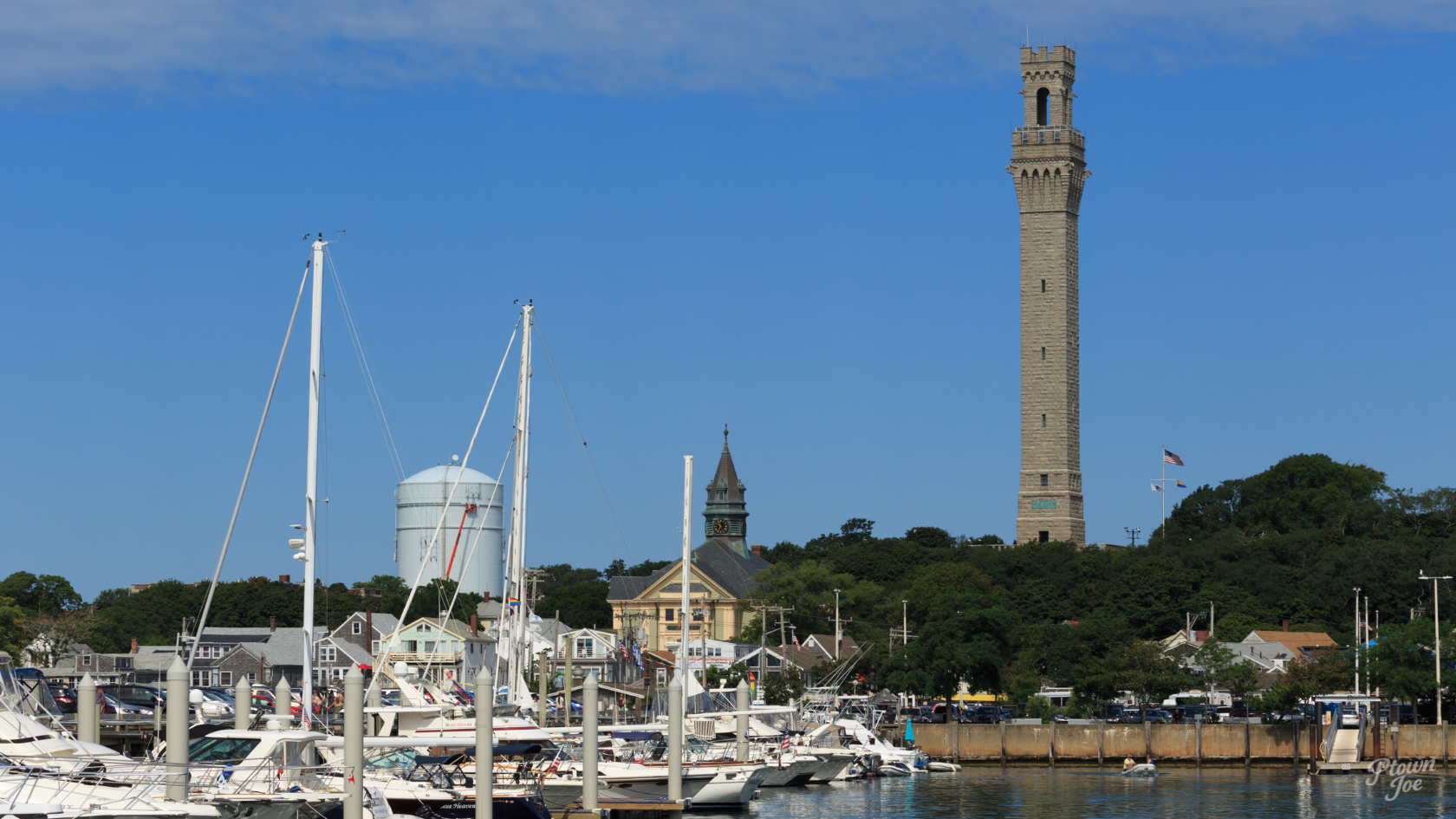
Why Is the Pilgrim Monument in Provincetown?
Many Americans grow up learning about the Pilgrims landing at Plymouth Rock in 1620. What is often overlooked is that the Mayflower actually arrived in Provincetown Harbor first.
After a difficult 66-day voyage across the Atlantic Ocean, the Mayflower reached Cape Cod on November 11, 1620. Before continuing on to Plymouth, the Pilgrims spent approximately five weeks anchored in Provincetown Harbor.
During their stay, they:
Explored the Cape Cod shoreline
Conducted scouting expeditions
Searched for suitable settlement locations
Established agreements for governing themselves
Encountered Native American lands and resources
Most importantly, it was aboard the Mayflower in Provincetown Harbor that the Pilgrims signed the Mayflower Compact, a foundational document often considered one of the earliest forms of self-government in colonial America.
The Pilgrim Monument was built to commemorate these historic events and recognize Provincetown's important place in American history.
The Mayflower Compact
Before leaving the ship, 41 male passengers signed the Mayflower Compact. This agreement established a framework for self-governance and cooperation among the colonists.
Historians frequently cite the Mayflower Compact as an important step toward democratic governance in America. While the document itself was brief, its significance has endured for more than 400 years.
The signing took place while the Mayflower was anchored in Provincetown Harbor, making Provincetown the birthplace of this historic agreement.
The Idea for a Monument
Throughout the 19th century, growing interest in preserving American history led communities across the country to commemorate significant historical events and locations. By the late 1800s, residents of Provincetown believed the Pilgrims' first landing deserved greater recognition. Although Plymouth had become synonymous with the Pilgrim story, many historians emphasized that Provincetown played a critical role in the early days of the Mayflower voyage.
Local citizens, historians, and civic leaders began advocating for a permanent monument that would honor the Pilgrims' time in Provincetown. The project gained momentum in the early 20th century through the efforts of the Cape Cod Pilgrim Memorial Association, an organization established specifically to create a memorial recognizing Provincetown's place in American history.
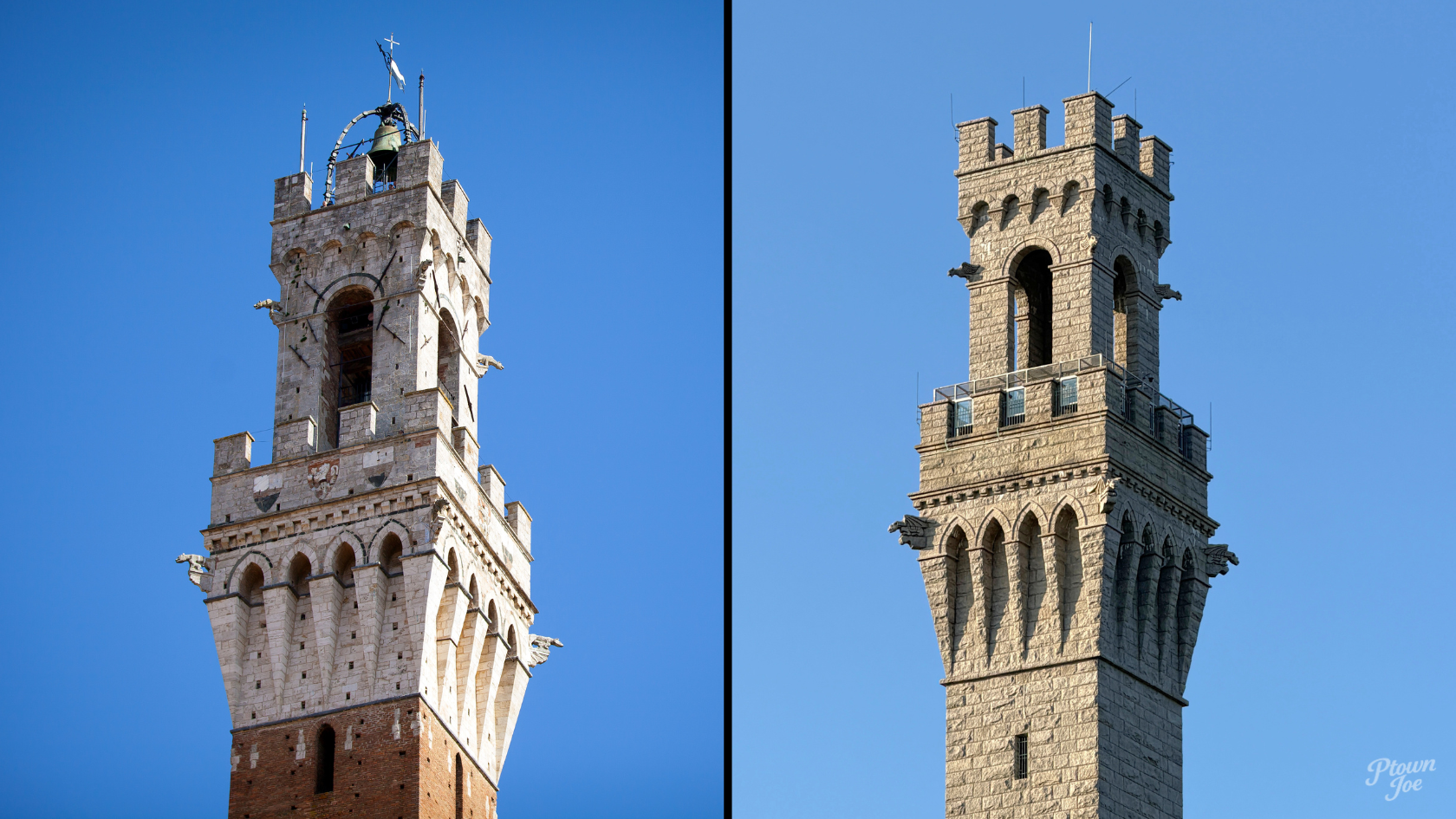
Torre del Mangia in Siena, Italy, the inspiration for the Pilgrim Monument in Provincetown, MA.
Building the Pilgrim Monument
The Pilgrim Monument was designed to be both a memorial and a landmark. Its distinctive design was inspired by the Torre del Mangia in Siena, Italy, a 14th-century bell tower renowned for its elegant proportions and commanding presence above the city skyline.
Rather than erecting a traditional statue or placing a commemorative plaque, the Cape Cod Pilgrim Memorial Association envisioned a dramatic granite tower that would dominate Provincetown's skyline and serve as a lasting tribute to the Pilgrims' first landing in New England and the signing of the Mayflower Compact in Provincetown Harbor.
Construction officially began in 1907 with a highly anticipated cornerstone-laying ceremony attended by President Theodore Roosevelt. Roosevelt arrived in Provincetown Harbor aboard the presidential yacht the Mayflower, a fitting coincidence given the monument's purpose. Sailing from his summer home in Oyster Bay, New York, the president addressed thousands gathered on High Pole Hill and emphasized the significance of preserving the nation's early history.
Construction Materials and Engineering
Building a 252-foot monument atop High Pole Hill presented a remarkable engineering challenge for the early twentieth century.
The monument was constructed primarily from:
Granite quarried in Stonington, Maine
Reinforced masonry
Skilled local labor and craftsmen
Thousands of granite blocks were cut from the quarries of Stonington, Maine, and transported by schooner and barge to Provincetown Harbor. Upon arrival, the stone was unloaded onto floats at the wharf before being transferred to small railway cars. Special railroad tracks were laid from the waterfront to the summit of High Pole Hill, allowing workers to move the massive stones to the construction site.
Workers spent three years transporting, shaping, and fitting thousands of granite blocks atop one of Provincetown's highest natural elevations. Despite the logistical challenges of moving heavy building materials to the Outer Cape and up the steep hillside, construction progressed steadily.
By 1910, the tower had reached its full height of 252 feet, making it the tallest all-granite structure in the United States.
On August 5, 1910, President William Howard Taft traveled to Provincetown to dedicate the completed monument before a crowd estimated in the tens of thousands, marking the culmination of one of the most ambitious memorial projects ever undertaken on Cape Cod.

Climbing the Pilgrim Monument
One of the most popular experiences for visitors is climbing to the top.
The monument features:
116 steps
60 ramps
Observation windows along the ascent
What You'll See from the Top
The observation deck offers some of the best views anywhere on Cape Cod.
Visitors can spot:
Provincetown Harbor & Long Point
The Atlantic Ocean
The Cape Cod National Seashore
Commercial Street
Race Point
Fishing vessels entering the harbor
The climb is often considered one of the most memorable experiences in Provincetown.
For visitors interested in exploring more of the area's natural beauty, be sure to visit the Provincetown Beaches Guide and learn about destinations like Race Point and Herring Cove Beach.
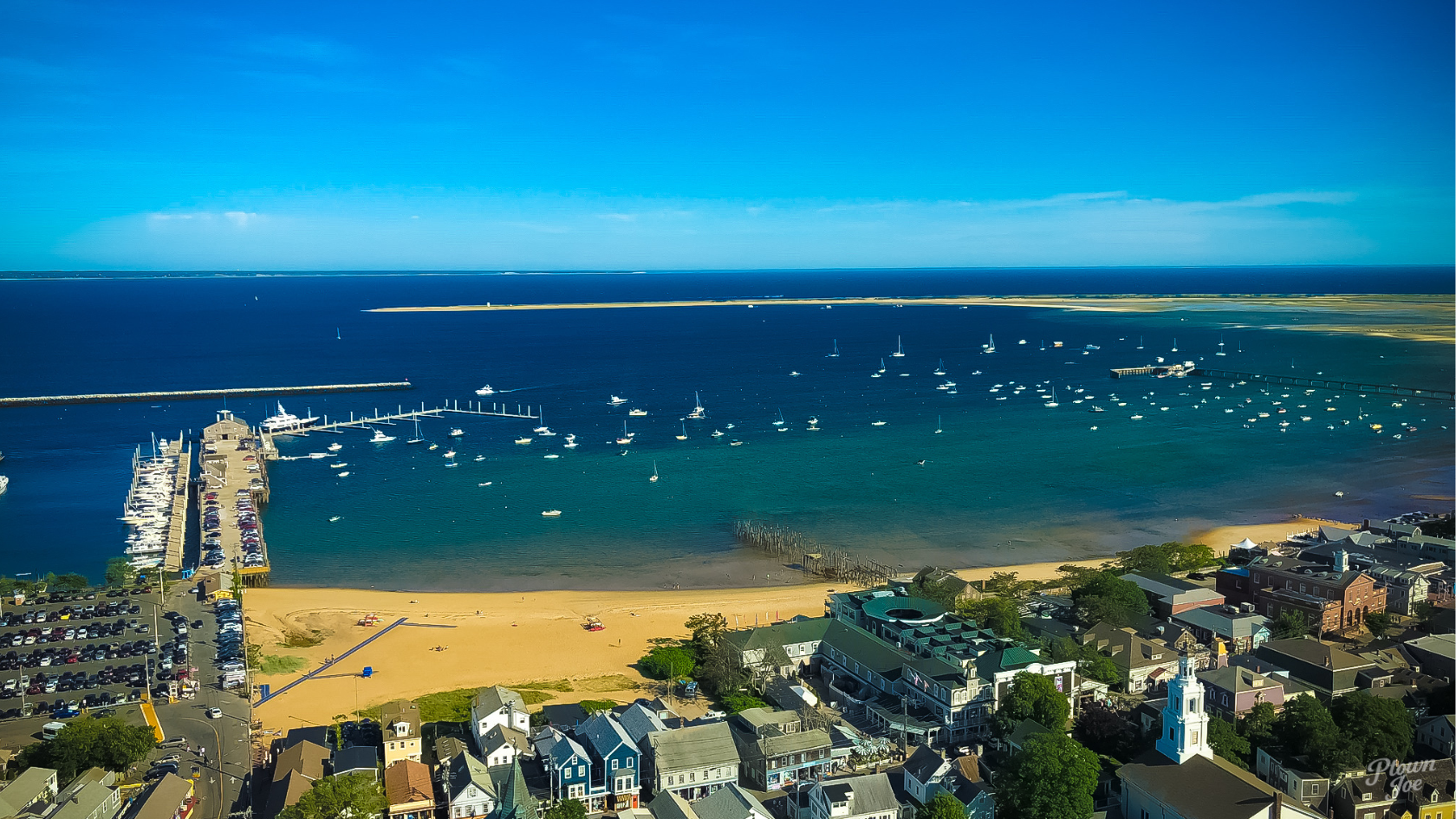
The Pilgrim Monument and Provincetown Museum
Today, the monument is operated by the Pilgrim Monument and Provincetown Museum, often referred to as PMPM.
The museum at the base of the monument provides additional context about:
The Wampanoag people
The Mayflower voyage
Provincetown's maritime history
The fishing industry
The Portuguese community
The town's art colony
LGBTQ+ history in Provincetown
Through exhibits, artifacts, photographs, and educational programs, PMPM preserves and shares the many layers of Provincetown's unique heritage.
Its central location makes it easy to combine with other popular Provincetown attractions. After visiting the monument, many travelers continue exploring:
The historic Town Center
Restaurants and Cafes
Provincetown Harbor
For a broader overview of everything the town has to offer, visit the Discover Provincetown guide.
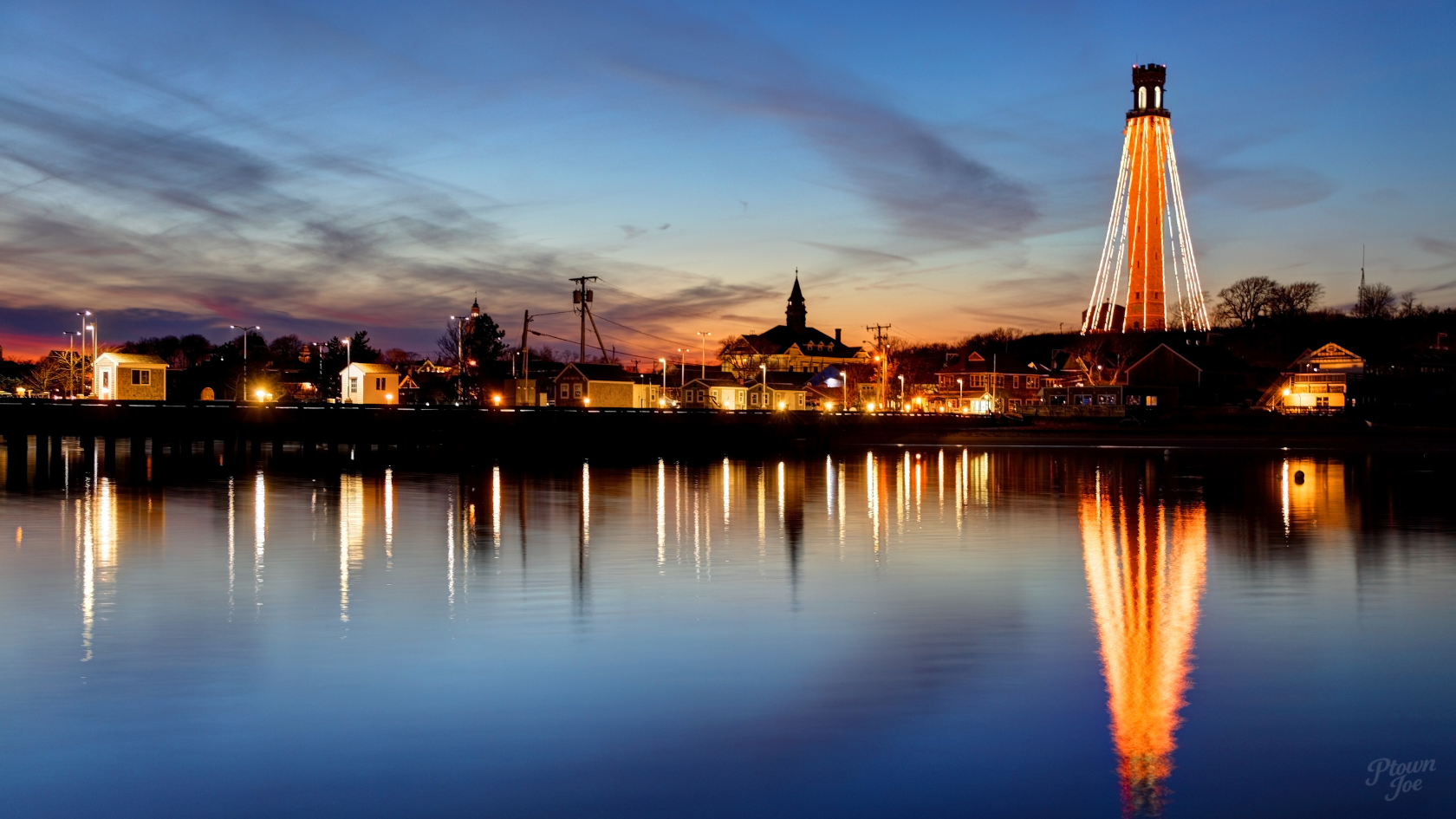
Why the Pilgrim Monument Still Matters
More than a century after its completion, the Pilgrim Monument remains one of New England's most important historical landmarks.
It commemorates:
The Pilgrims' first landing in New England
The signing of the Mayflower Compact
Provincetown's role in American history
The enduring spirit of exploration and self-governance
At the same time, it serves as a gateway to understanding the broader history of Provincetown, from Indigenous communities and maritime industries to artists, writers, fishermen, and modern-day visitors.
Standing atop High Pole Hill, the monument continues to connect the past and present, offering visitors both a history lesson and one of the most spectacular views on Cape Cod.
FAQ: Pilgrim Monument in Provincetown
-
The monument was built to commemorate the Pilgrims' first landing in New England and the signing of the Mayflower Compact in Provincetown Harbor in 1620.
-
The Pilgrim Monument stands 252 feet tall, making it the tallest all-granite structure in the United States.
-
Yes. The Mayflower arrived in Provincetown Harbor on November 11, 1620, before the settlers later established their colony in Plymouth.
-
Construction began in 1907 and was completed in 1910.
-
Yes. Visitors can climb 116 steps and 60 ramps to reach the observation deck at the summit.
-
Absolutely. It offers some of the best views on Cape Cod while providing valuable insight into Provincetown's history and the Mayflower story.
For the latest information on visiting the Pilgrim Monument and Provincetown Museum, including hours, exhibits, special events, and admission tickets, visit the official Pilgrim Monument and Provincetown Museum website.